

Prague
Prague is where most teachers start, and for practical reasons it’s the right choice for most first-time arrivals in the Czech Republic.
The city has the broadest mix of teaching work: dozens of language schools, a large in-company market (finance, tech, engineering), international schools, and a healthy private tutoring scene. There are more clients, more variety, and more jobs opening at any given time than anywhere else in the country. If you need to build a full schedule quickly, Prague gives you the best odds.
The in-company market is particularly strong. Prague is the commercial capital, and businesses across the city invest in English training for their employees. Early morning and lunchtime company classes are a staple of most teachers’ timetables, with language schools acting as brokers between you and the corporate clients.
The city’s metro, tram, and bus network is excellent, and learning to use it strategically is one of the most practical skills you’ll develop. If you can cluster your classes along a single metro line (A, B, or C), you’ll avoid the unpaid dead time that comes from criss-crossing the city. A monthly transport pass costs 550 CZK and covers everything.
The downsides: Prague has the highest rents in the Czech Republic. A room in a shared flat typically costs 8,000 to 12,000 CZK; a one-bedroom flat runs from around 12,000 CZK to 25,000 CZK or more depending on district and quality. The tourist saturation in the centre can make parts of the city feel like a theme park. And competition for private students is higher here than elsewhere, because there are simply more teachers.
Prague suits: teachers chasing the deepest job market and the fastest route to full hours, as long as you can handle the competition and the rents that come with it. For the full picture of what teaching in Prague is like, see Teaching English in Prague: What to Expect.
Brno
Brno is the Czech Republic’s second city, and it’s a strong alternative to Prague.
The teaching market is smaller but real. Brno has a large university population, a growing tech sector (it’s sometimes called the Czech Silicon Valley), and steady demand for Business English from IT companies, engineering firms, and startups. Language schools here recruit actively, and the in-company market is solid.
The big advantage is the cost of living. Rents are noticeably lower than Prague, the city is compact and easy to navigate (cross-town travel is short, which helps you stack lessons efficiently), and the overall cost of daily life is cheaper. Many teachers find that Brno offers a better ratio of income to expenses than Prague.
The city has a strong student energy, with two major universities keeping the bars, cafes, and cultural scene lively, and a growing expat community that’s large enough to be supportive but small enough that you’ll integrate into Czech life more than you might in Prague.
The downsides: fewer jobs overall, fewer international schools, and a smaller private tutoring market. If you arrive at the wrong time, you might wait longer for the right position than you would in Prague. The city is less cosmopolitan, which is part of the appeal for some and a limitation for others.
Brno suits: teachers who’ve already taught somewhere and would swap a little job volume for lower rents and a calmer pace.
Ostrava
Ostrava is the Czech Republic’s third-largest city, with an industrial heritage and a smaller but loyal teaching market. Rents and living costs are the lowest of the major cities, and once you’re established, corporate clients (particularly in heavy industry and engineering) can provide steady, well-paid work.
The job market is smaller, with fewer language schools and fewer positions opening, and the expat community is tiny compared to Prague. But teachers who settle here often stay, precisely because the combination of low costs and loyal clients creates a comfortable, sustainable life.
Ostrava suits: the budget-focused and the self-reliant. Rents here are the lowest of any Czech city, but you’ll be building a client base largely from scratch, with few other foreign teachers around to share leads.
Olomouc and Plzeň
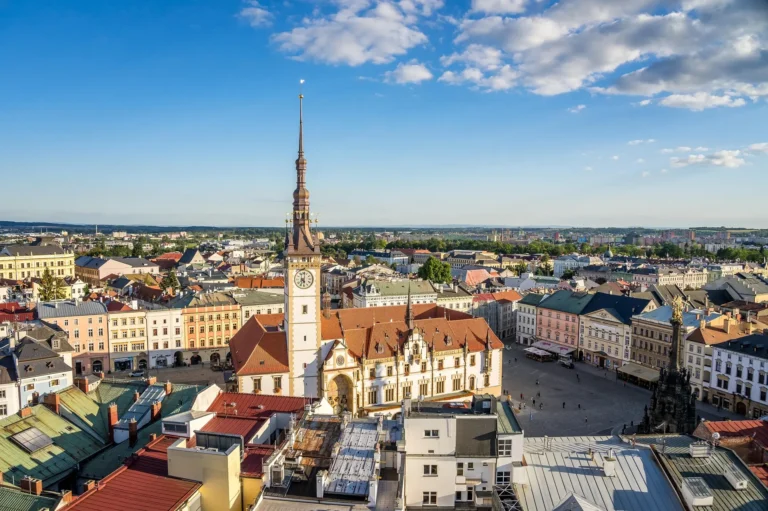
Both are mid-sized university cities with smaller teaching markets. Olomouc has a beautiful historic centre and a strong university community; Plzeň (home of Pilsner Urquell) has a more industrial character. Both offer low rents, manageable cities, and the kind of immersive Czech experience that Prague’s international bubble sometimes dilutes.
Teaching work exists (a few language schools, some private clients, occasional public school placements) but it’s limited. These cities work best for teachers who are flexible, self-reliant, and motivated by the cultural experience rather than maximising income.
Smaller towns and the AIA route
If you’re open to life outside the cities, the Academic Information Agency (AIA) can connect you with public school placements across the country. These placements, often in towns you’ve never heard of, tend to offer more stable hours than the freelance patchwork of Prague, and accommodation may be included or subsidised.
The trade-off is isolation. You’ll likely be the only English-speaking person in town, the job market is the single school, and socialising depends on making Czech friends (which, for the record, is one of the most rewarding things you can do here). It’s not for everyone, but teachers who embrace it often describe it as their most formative TEFL experience.
How to decide
If this is your first teaching job: Prague. More jobs, faster hiring, more support infrastructure.
If you want the best income-to-cost ratio: Brno. Lower rent, solid teaching market, shorter commutes.
If you want the cheapest living: Ostrava or a smaller city.
If you want deep cultural immersion: a smaller town through AIA, or Olomouc/Plzeň.
Many teachers start in Prague and move elsewhere after a year, once they have experience and a better sense of what they want. The reverse also works. Some start in a smaller city for the experience and move to Prague when they want to maximise their income.