


Bangkok
Bangkok is the obvious starting point. It has more teaching jobs than everywhere else in Thailand combined. Every school type is represented here: government schools, private and bilingual schools, language centres, universities, international schools, and corporate training. If you want the widest range of options and the best chance of finding something quickly, Bangkok is where to look.
Salaries are the highest in the country, but so is the cost of living, particularly rent. The popular expat neighbourhoods (Ekkamai, Thonglor, On Nut) are noticeably more expensive than the outer areas, and commuting across Bangkok can eat hours out of your day. Teachers who live near their school on a BTS or MRT line have a fundamentally different quality of life from those who commute by bus through gridlock traffic.
The city is enormous, energetic, and occasionally overwhelming. There’s a huge international community, world-class food at every price point, and a social scene that never stops. Some teachers thrive on it; others find it exhausting. If you’re someone who needs green space and quiet, Bangkok takes deliberate effort to find those things.
Bangkok suits:
- teachers who want maximum job choice, the highest earning potential, and don’t mind the pace
- first-time teachers who want the safety net of a large expat community and plenty of other foreign teachers around
- corporate English teachers and those targeting international schools
Chiang Mai
Chiang Mai is Thailand’s second most popular base for TEFL teachers, and for many it’s the preferred one. The city is smaller, cheaper, cooler (in climate – it’s in the northern mountains), and has a well-established community of expats, digital nomads, and teachers.
Teaching positions are mainly in government schools, language centres, and a smaller number of private and bilingual schools. The job market is significantly smaller than Bangkok’s, so you may need to be more flexible on school type and location. Salaries are typically a little lower, but the reduced cost of living, particularly rent, often means teachers save as much as or more than they would in the capital.
The pace of life is gentler. Mountains and jungle trekking are a short motorbike ride away. Weekend markets, temples, and a strong café culture give the city a laid-back but interesting character. The expat community is large enough to provide social life and support without the intensity of Bangkok.
Our Thailand TEFL course is based in Chiang Mai, which means graduates are already connected to schools in the region.
Chiang Mai suits:
- teachers who want a balance of good job prospects and quality of life
- those who prefer a smaller city, lower costs, and access to nature
- teachers doing our in-person TEFL course who want to stay in the north
Phuket and the southern coast
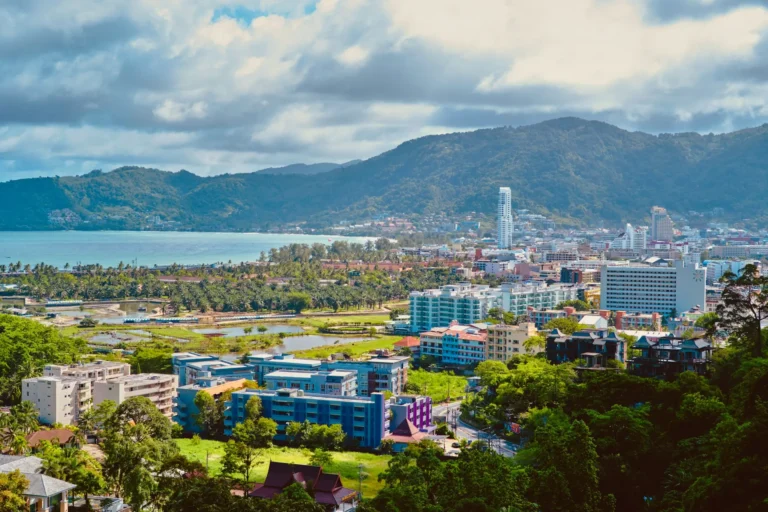
The draw is obvious – beaches, islands, warm water year-round. Phuket, Krabi, and Koh Samui all have teaching positions, mainly in private schools and language centres connected to the tourism industry.
The reality is more mixed. Jobs are competitive because many teachers are drawn to the lifestyle, which means good positions don’t stay vacant long. The cost of living is higher than most of Thailand due to tourism, and rent in popular areas can be close to Bangkok prices. Salaries don’t always reflect this – you may earn less than you would in the capital while paying nearly as much.
The expat community is active but skews heavily toward tourism and hospitality rather than teaching. And while the beach lifestyle sounds ideal, teaching schedules (early mornings, split shifts, Saturday classes) don’t always align with the image of long afternoons on the sand.
The coast suits:
- teachers who genuinely prioritise lifestyle over earnings and are comfortable with a potentially less predictable job market
- teachers with savings or other income who want part-time teaching alongside a beach-focused life
Isaan (northeast Thailand)
This is where you’ll find the most authentic cultural immersion in Thailand. The northeast region – cities like Khon Kaen, Udon Thani, Nakhon Ratchasima (Korat), and smaller towns throughout – has a consistent need for English teachers at government schools, and the cost of living is the lowest in the country.
You may be one of very few foreigners in your town. That brings genuine immersion. You’ll practise Thai by necessity, eat local food because there’s nothing else, and become part of a community in a way that’s hard to replicate in Bangkok or Chiang Mai. It also means fewer Western comforts, a limited social scene with other expats, and potentially less support if you run into problems.
Salaries are modest (typically toward the lower end of the government school range), but expenses are very low. Teachers who budget carefully in Isaan often save more than those earning higher salaries in the capital.
Isaan suits:
- teachers who want deep cultural immersion and are comfortable being self-reliant
- those who are genuinely flexible about location and don’t need an expat community around them
- budget-conscious teachers who want to maximise savings from a modest salary
Other cities and towns
Several smaller cities have their own character and a smaller but steady demand:
Chiang Rai – further north than Chiang Mai, cooler and quieter still. A scenic environment with government school positions and very low living costs.
Hua Hin – a royal resort town south of Bangkok. Growing demand, a comfortable lifestyle, and a mix of Thai and expat residents. More affordable than the islands.
Ayutthaya – an hour from Bangkok. The ancient capital offers a historical setting, lower costs than the capital, and easy access to Bangkok for social life or additional work.
Pattaya – the city has a large international community and language centre demand, but its reputation (justified or not) puts some teachers off. Jobs are available, particularly for corporate and adult learners.
How to decide
The honest answer is that there’s no wrong choice, only choices that suit different people. Here are the factors that actually matter:
If job volume is your priority: Bangkok, then Chiang Mai.
If cost of living matters most: Isaan, then Chiang Mai.
If you want a beach lifestyle: the southern coast, with realistic expectations about income.
If cultural immersion is the goal: Isaan or a smaller provincial town.
If you want the safest, most supported start: Bangkok (most jobs, biggest community, most infrastructure) or Chiang Mai (strong community, our TEFL course based there, manageable size).
Many teachers start in one city and move to another after their first contract. Thailand is small enough that relocating between cities is straightforward, and each move teaches you something different about the country.
For detailed city profiles including salaries, accommodation costs, and school types in each location, see the full Thailand guide on Eslbase.