
4-Week TEFL Course in Chiang Mai, Thailand
Get certified to teach English anywhere in the world, with training and job support from SEE TEFL, our experienced partner in Thailand.



Why Take This Course?
You'll get an accredited certificate
SEE TEFL's certification is recognised worldwide, with an optional upgrade to an Ofqual-regulated Level 5 qualification.
You’ll teach real students
You’ll complete at least 6 hours of classroom teaching practice, something employers look for.
You’ll get job support during and after the course
We'll help you find work in Thailand or elsewhere.
What this course qualifies you for - and what it asks of you
Thailand is one of the most established TEFL job markets in Asia and remains a popular destination for new English teachers. Whether you stay in Thailand after the course or head elsewhere, this qualification sets you up to teach English around the world.
Our accredited, 4-week TEFL course includes real teaching practice, expert feedback, and lifetime job support – to help you find work wherever you choose to go.
This is a full-time, intensive course that requires real commitment. It’s challenging, but most trainees say it’s one of the most rewarding things they’ve ever done. You’ll come out of it with practical classroom skills, new confidence, and a qualification that’s respected worldwide.
Want a closer look at the day-to-day? Go to What to Expect.
What You’ll Get When You Enrol
Training
- 120-hour, 4-week intensive course
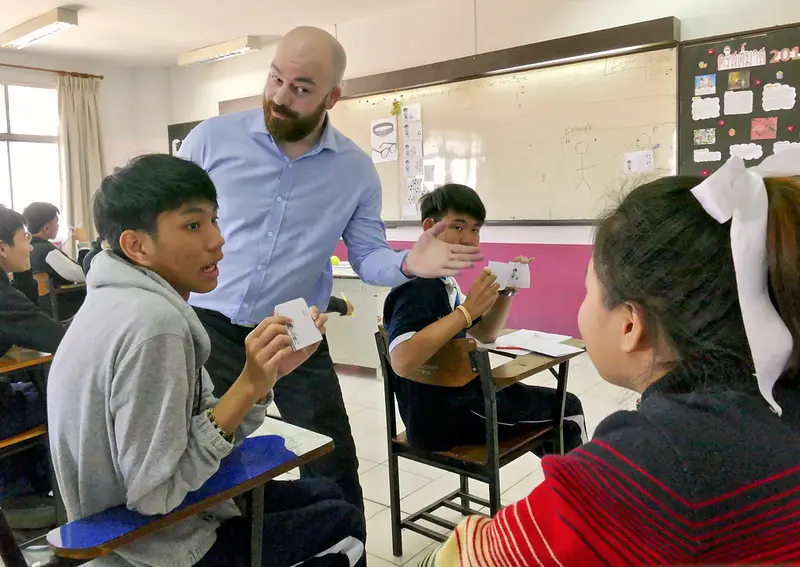
- 6 hours of observed teaching practice at local schools
- Optional: TQUK Level 5 Certificate extension (see FAQ for details)
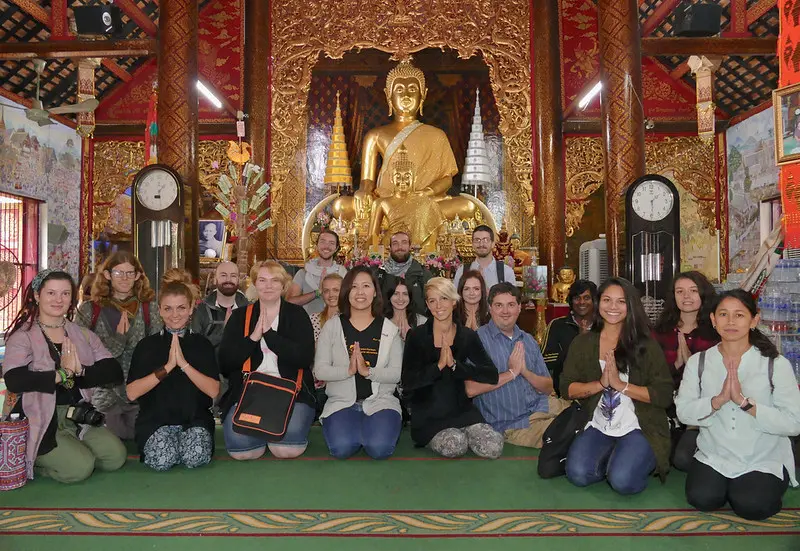
- 1-day Thai cultural awareness training
Support
- Pre-course support and visa guidance
- Help finding accommodation
- Job placement support during and after the course
Additional support from School of TEFL
- Optional access to our Grammar Course
- Deposit Refund Guarantee:
If you complete the course and don’t pass, we’ll refund your deposit.
Who Delivers the Course?
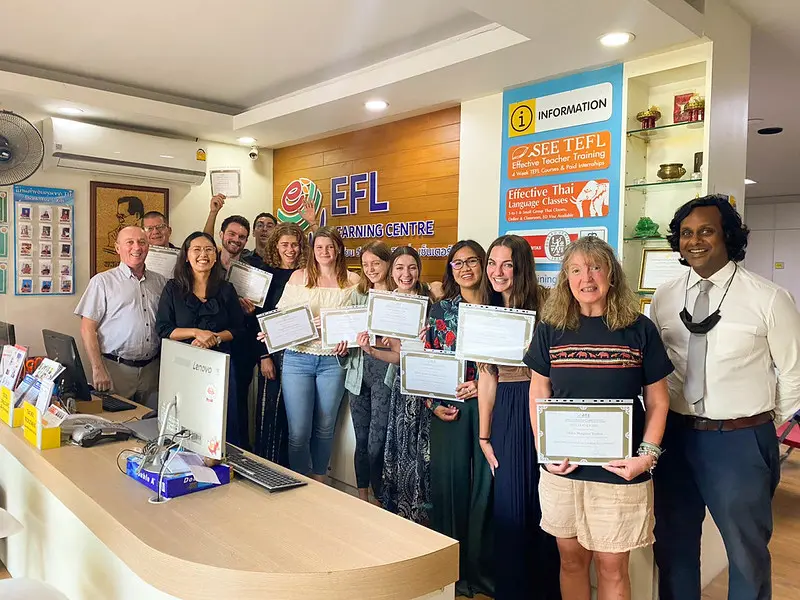
We partner with SEE TEFL to deliver your course – an internationally recognised program, backed by first-class local expertise.
You’ll train full-time at their centre in Chiang Mai, gaining practical classroom skills and real teaching experience.
SEE TEFL has a strong reputation, with outstanding ratings from two of the leading independent review sites for TEFL courses:
4.9/5 on GoOverseas
9.8/10 on GoAbroad.com
(based on reviews as of February 2026)
You can check out their reviews online for extra peace of mind.
You can read more about how we work with and review our partner training centres here.
Where Will I Take the Course?
The training centre is located on Kaew Nawarat Road in Chiang Mai, within easy reach of the Old City, the Night Market, and the Tha Pae Gate area. It’s a purpose-built school with modern classrooms and facilities, also used for everyday English and Thai language classes.
Chiang Mai is a relaxed, walkable city with a well-established expat community and a lower cost of living than Bangkok. There are temples, street food stalls, cafés and markets throughout the city, and the surrounding mountains and countryside are never far away – it’s a comfortable and practical place to live, study, and start teaching.
What Will I Learn?
You’ll learn how to plan and deliver effective English lessons. The course covers:
- Language awareness – grammar, vocabulary and phonology
- Lesson planning, lesson structure, and classroom management
- Teaching speaking, listening, reading, and writing
- Using games, visuals, and interactive techniques to keep learners engaged
- Applying different teaching methods in group and one-to-one settings
- Adapting lessons for different student needs, ages, and learning styles
- Teaching children and managing large, mixed-ability classes
- Finding and developing materials and teaching resources
- Cultural awareness in the classroom
- Strategies for finding TEFL jobs and presenting yourself confidently to employers
You’ll leave with a solid foundation and the practical tools to start teaching right away – whether in Thailand, online or elsewhere.
What to Expect
Before the course
Once you’ve enrolled and paid your deposit, we’ll notify SEE TEFL, who will review your application before confirming your place.
(If for any reason we or they can’t offer you a place, your deposit will be fully refunded.)
You’ll stay in regular contact with both the School of TEFL team and SEE TEFL in the lead-up to the course. You’ll get guidance on visas and documentation, help with arranging your accommodation, and support with any questions you have.
The remaining course fee is paid directly to SEE TEFL on the first day of training – so you only pay the balance once you’ve arrived, seen the school, and met the trainers.
SEE TEFL offers a complimentary airport pickup in Chiang Mai on request, and their team are on hand to help you get settled when you arrive.
Day to day on the course
Theory
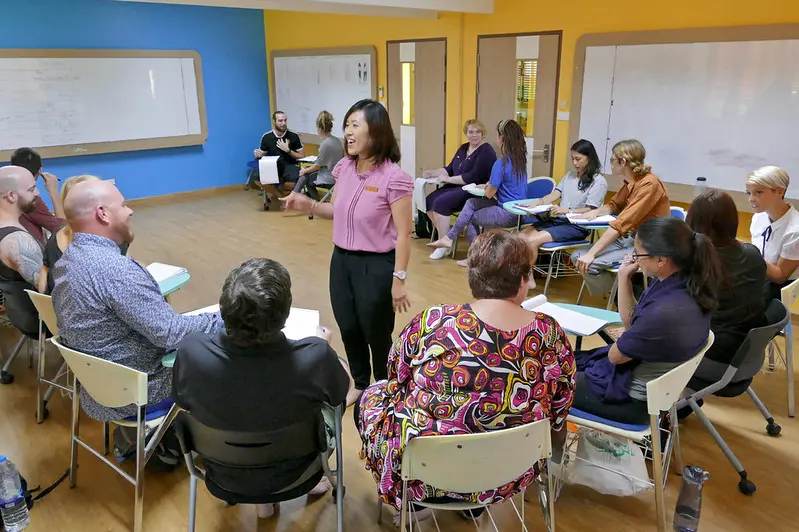
The course runs Monday to Friday for four weeks. You’ll cover a structured programme of teaching inputs – practical workshops on individual classroom skills such as teaching pronunciation, vocabulary, grammar, speaking, listening, reading and writing, as well as lesson planning, classroom management, and teaching children. Alongside this, you’ll have grammar and language awareness sessions to develop your understanding of the structure of English and how to teach it effectively. You’ll also have 8 hours of Thai language instruction – which doubles as a chance to experience what it’s like to be a language learner – and a full day of cultural awareness training.
Practice
You’ll teach 6 one-hour observed lessons at a range of local schools, with real students at different levels and ages – from kindergarten through to college or university level. Each lesson is observed by an experienced trainer, and you’ll receive one-to-one feedback after every session. You’ll also have supervised lesson planning time to prepare for each practice.
Coursework and assessment
You’ll receive two grades at the end of the course: one based on your performance across the 6 observed teaching practices (including your lesson preparation), and one based on a formal language awareness examination. You’ll also complete three written assignments during the course.
By the end of the course, you’ll have the knowledge, skills, and practical experience you need to confidently pursue a career in English language teaching.
Accommodation
Optional hotel booking through SEE TEFL
SEE TEFL can arrange a 30-night stay at a nearby hotel on your behalf. The hotel is close to the Night Market, the Old City, and Tha Pae Gate, and around 25 minutes’ walk from the school (or a short shared taxi ride for about 30 baht).
– Single room: $400 USD for 30 nights
– Double room: $450 USD for 30 nights
* Prices are approximate and may vary slightly.
This is a budget hotel – clean and fairly well-maintained with air conditioning, hot water, Wi-Fi, and a swimming pool, but you shouldn’t expect luxury.Finding your own accommodation
There are plenty of guesthouses, hotels, and serviced apartments throughout Chiang Mai. Good deals can often be found by contacting places directly and negotiating a discount for a monthly stay. Several options are within walking distance of the school, and SEE TEFL can point you in the right direction.
For longer-term stays after the course, studio apartments are widely available for around $100–200 USD per month — Chiang Mai has a large student population, so affordable options are plentiful.
After the course
What can I do with my TEFL certificate from School of TEFL in Thailand?
The School of TEFL course trains you to teach in Thailand or anywhere in the world. If you decide to stay in Thailand, you’ll find ongoing demand for qualified English teachers, with opportunities at all levels from kindergarten through to university.
SEE TEFL has been placing graduates in teaching roles since 2006 and has built up extensive connections with schools across Thailand. Their support includes a job-finding workshop during the course, lists of school contacts, and ongoing guidance to help you find work independently. Their sister language school also manages a number of teaching positions in Chiang Mai and across the country, with SEE graduates given first priority.
Where can I teach?
You could stay in Chiang Mai, where there is a high demand for teachers at all levels, from kindergarten to university and at language schools. Or you could head to Bangkok or Phuket, where you’ll find a wide range of opportunities in a bigger-city setting. There are also positions available in smaller towns and more rural areas, if you’d prefer a quieter pace of life and a chance to experience a different side of Thailand.
Most full-time teaching work is at government or private schools, typically Monday to Friday with contracts of 10–12 months. Language school work is also widely available, often part-time with more flexible hours. Some graduates also choose to teach online or take up volunteer teaching positions.
If you decide to leave Thailand, your TEFL certificate opens up opportunities to teach in dozens of countries worldwide.
Again, the School of TEFL team and the staff at SEE TEFL will provide you with advice and support. We offer guidance on tailoring your CV to local market conditions and support you in identifying opportunities with schools and other potential employers. SEE TEFL also offers a one-to-one consultation with the school director for graduates looking to teach abroad.
Eligibility
To take the course
Minimum 18 years of age.
Proficient in all aspects of English. (Non-native speakers will need a minimum IELTS score of 6.5 or equivalent.)
Secondary education to pre-university level and able to complete an intensive university-level course.
Open to all nationalities, with no upper age limit.
To work in Thailand
Accredited TEFL certification
Bachelor's degree in any subject is normally required to obtain a work permit.
Clean police/criminal record check from your home country (advisable).
Upcoming Course Dates
| 2nd Mar – 27th Mar 2026 | Last few places |
|---|---|
| 20th Apr – 15th May 2026 | Limited places |
| 18th May – 12th Jun 2026 | Available |
| 22nd Jun – 17th Jul 2026 | Available |
| 27th Jul – 21st Aug 2026 | Available |
| 24th Aug – 18th Sep 2026 | Available |
| 21st Sep – 16th Oct 2026 | Available |
| 19th Oct – 13th Nov 2026 | Available |
FAQ
Course and Accreditation
Can I get a Level 5 TEFL certificate?
SEE TEFL is an approved centre of Training Qualifications UK (TQUK), and offers an optional TQUK Level 5 Certificate in Teaching English as a Foreign Language — an Ofqual-regulated qualification, indexed at the same level as a CELTA on the UK’s Regulated Qualifications Framework.
This involves completing additional assignments over a 6-week period, starting from day one of the course. The extra cost is $100, which covers the TQUK awarding fee.
Most graduates find that the standard SEE TEFL certificate is all they need to find work in Thailand and beyond. The Level 5 extension is worth considering if you plan to teach in the UK, or if a prospective employer specifically requires an Ofqual-regulated qualification.
How much does the course cost?
Please note:
These prices may be lower if you see an offer listed on this page or have a discount code.The course costs $1395 USD. You’ll pay a deposit of $495 when you enrol and the balance directly to the partner centre approximately before the start of the course.
What's included in the course price?
Included in the price of the course are:
– 4-week, 120-hour course (Monday to Friday)
– 6 hours of observed teaching practice at local schools
– 8 hours of Thai language instruction
– 1-day Thai cultural awareness training
– Pre-course grammar terminology and teaching process review
– All study materials, reference books, testing and certification
– Expert tuition from certified vocational trainers
– Pre-course support, including visa guidance
– Complimentary airport pickup on request
– Accommodation assistance
– Job-finding workshop and ongoing job support
– Job support from School of TEFL
– Deposit refund guarantee
– Optional access to our Grammar CourseHow easy/difficult is the course?
This is an intensive, university-level course that requires dedication and hard work! It’s not a ‘shortcut’ TEFL course. However, with your commitment, you’ll emerge from it well-prepared and highly motivated to start your teaching journey.
Will I teach actual students on the course?
Yes, you’ll teach actual ESL students at local schools for 6 hours.
Will I learn how to teach both adults and children?
Yes. The course covers teaching techniques for a range of age groups, and includes a dedicated module on teaching children. Your 6 observed teaching practices are with real students at different levels and ages – typically including kindergarten, primary, secondary, and college or university classes.
How will I be assessed?
You’ll receive two grades at the end of the course. One is based on your performance across the 6 observed teaching practices, including your lesson preparation. The other is based on a formal examination at the end of the language awareness component. You’ll also complete three written assignments during the course.
Do I need to speak Thai to take the course?
No – TEFL courses show you how to teach without needing to know the language of your students. If you go on to teach in an English speaking country, you’ll probably have classes of mixed nationality/first language, so using the students’ first language isn’t an option anyway.
Who is the course suitable for?
The course is suitable for motivated individuals of all ages and backgrounds who want to teach English in Thailand, around the world or online.
Enrolment and Practicalities
How early should I book?
Courses run every month, but SEE TEFL advises booking early as places can fill up. We’d recommend booking at least a couple of months ahead if you have a preferred start date.
How many other people will be on the course with me?
Training groups are limited to 20 trainees.
What else should I bring/wear for the course?
You’ll need to dress smartly and professionally when teaching at local schools – lightweight formal clothing is ideal for Thailand’s climate. Visible tattoos should be covered as much as possible. Outside of teaching practice, you can dress casually.
It’s also worth bringing originals of your relevant qualifications (degrees, certificates), as you may need these when applying for teaching jobs after the course. If you don’t already have a police/criminal record check from your home country, it’s advisable to arrange one before you travel – though it’s also possible to obtain one in Thailand if needed.
Do I need to do anything to prepare for the course?
SEE TEFL will send you an online grammar terminology and teaching process review around 4 weeks before your start date. This is a helpful refresher to prepare you for the course, and is included at no extra cost.
We also include access to our Grammar Course when you enrol, which some trainees choose to use as additional preparation.
If you’d like some additional background reading, Learning Teaching by Jim Scrivener and The Practice of English Language Teaching by Jeremy Harmer are both good options. These aren’t required, but some trainees find it helpful to be familiar with a few terms and ideas before the course begins.
What paperwork do I need to bring?
You should bring originals of all relevant qualifications – in particular your degree certificate and transcripts. A notarised copy of your degree may be needed later when applying for a work permit.
It’s also advisable to bring a police/criminal record check from your home country. If you don’t have one, don’t worry – it’s possible to obtain one from the Thai police in Chiang Mai or Bangkok. SEE TEFL can advise on which type of check is most appropriate for your situation.
If you’re a non-native English speaker, bring evidence of your English proficiency (e.g. your IELTS certificate).
What kind of job help and support is provided?
SEE TEFL provides extensive job support, including a dedicated job-finding workshop during the course that shows you how to find work independently. You’ll receive lists of school contacts and job listings, and graduates are invited to join a private Facebook group where earlier graduates regularly post job openings. SEE TEFL has been training teachers since 2006 and has built up a wide network of schools that prioritise applications from their graduates. Their sister school also manages around 50 teaching positions across Thailand, recruiting exclusively from SEE TEFL course graduates.
For those looking to teach outside of Thailand, SEE TEFL offers a one-to-one consultation with the school director.
Job support is ongoing and can be requested at any time after the course – not just in the weeks immediately after training.
In addition to the support offered by the partner centre, School of TEFL provides continued guidance and career advice. Before, during, and after your course, we’re here to help with CV preparation, job applications, interview tips, and building your TEFL career. You’re always welcome to reach out by email or phone for personalised support – we’re here to help whenever you need us.
What else can SEE TEFL help with / provide?
SEE TEFL offers a complimentary airport pickup and transfer in Chiang Mai on request, and can help you get set up with a Thai SIM card and prepaid data package when you arrive. Their staff are always available for any questions about living and working in Thailand and will do their best to assist you whenever they can.
Teaching in Thailand
What are the requirements to teach English in Thailand?
To teach English in Thailand, you’ll typically need:
– An accredited TEFL certification (with observed teaching practice, which is required for the majority of teaching positions).
– A bachelor’s degree in any subject – this is normally required to obtain a non-immigrant B (Business) visa and work permit, but see below *
– A clean police/criminal record check from your home country.* It is possible to find teaching work without a bachelor’s degree, but you’ll need to be more flexible about location and school type, and there are other steps you’ll need to take as well. Obtaining a work permit is also more difficult. Please contact us for more information about this.
Do I need a degree to teach English in Thailand?
It is possible to find teaching work without a bachelor’s degree, but you’ll need to be more flexible about location and school type, and there are other steps you’ll need to take as well. Obtaining a work permit is also more difficult. Please contact us for more information about this.
What type of visa do I need to teach English in Thailand?
To enter Thailand for the course, most trainees use either a 60-day Tourist Visa or a 60-day Visa Exemption, both of which can typically be extended for a further 30 days in Chiang Mai. This provides sufficient time to complete the course and begin looking for work. (Visa options depend on nationality.)
Once you’ve secured a teaching position, your school will provide the paperwork to support your application for a Non-Immigrant B (Business) visa and work permit, which allows you to stay and work long-term. This visa can be extended each year. Many graduates apply for this visa at a nearby Thai embassy in Southeast Asia – a well-established process that SEE TEFL can guide you through step by step.
SEE TEFL has over 17 years of experience helping trainees navigate the visa and immigration process, and provides guidance and support throughout.
Can non-native English speakers teach English in Thailand?
Yes. The course is open to both native and non-native speakers, and SEE TEFL has trained people from more than 40 countries. Non-native speakers will need a minimum IELTS score of 6.5 (or equivalent) to enrol on the course.
After qualifying, non-native speakers with a bachelor’s degree are likely to find teaching work, though some schools do prefer to hire native speakers. Non-native speakers without a bachelor’s degree may find it significantly harder to secure a position.
What is the hiring period for teaching English in Thailand?
Schools in Thailand hire throughout the year, but there are two key periods when demand is highest – around May and November, when new academic semesters begin. The March, April, and October courses are particularly well-timed for this, as they finish just before schools begin recruiting for the upcoming semester.
You don’t need to time your course around these dates though – teachers regularly find positions mid-year, and job support is available whenever you’re ready to start looking.
What are the typical working conditions when teaching English in Thailand?
Most full-time teaching positions are at government or private schools, covering kindergarten through to secondary level. You’ll typically be expected in school from around 7:30am to 4:30pm, Monday to Friday. Contracts normally run for 10–12 months, though shorter contracts of one semester (4–5 months) are also available. If both you and the school are happy, contracts can be extended indefinitely.
Full-time school positions usually include a fixed monthly salary, paid sick and holiday leave, basic health insurance, and support with your Non-Immigrant B visa and work permit.
Language school work is also available, with classes typically in the evenings and at weekends. Most language school positions are part-time and paid by the hour, which suits teachers who want more flexibility. Some teachers combine a full-time school position with part-time language school work for additional income.
What types of teaching jobs are available in Thailand, and where are they?
There are teaching opportunities across the country. The largest concentration of jobs is in Bangkok, Chiang Mai, and Phuket, but there is also demand in smaller cities and more rural areas for teachers who are willing to be flexible about location.
The main types of paid teaching work are: full-time positions at government or private schools (kindergarten through to university level), part-time work at language schools, freelance private tutoring, and online teaching.
SEE TEFL’s sister school manages around 50 teaching positions in Chiang Mai and across Thailand, and recruits exclusively from SEE TEFL graduates.
How much will I earn teaching English in Thailand?
Salaries vary depending on the type of school, location, and your experience. As a guide, starting salaries for full-time positions at formal schools typically range from around 32,000 to 42,000 THB per month (approximately $900–1,200 USD). Language school work is usually paid by the hour.
Will I be able to save money teaching English in Thailand?
Thailand isn’t a destination where most teachers save large amounts, but the cost of living – particularly in Chiang Mai – is low enough that many teachers find their salary comfortably covers day-to-day expenses and allows them to enjoy life without financial pressure.
Please note:
Job availability, visa policies, and employer requirements can change. We always recommend checking official sources alongside any guidance provided.
Our support for Action Against Hunger
Education doesn’t exist in isolation. A child’s ability to learn depends on access to basic needs like food, clean water, and healthcare. That's why for every TEFL course we sell in 2026, we're donating £5 to Action Against Hunger via Work for Good.
